The port that made Savannah was built on cotton and pine. But coffee passed through here too, and left a stranger history than you might expect.
When Marcus and I decided to open Copper Lane in Savannah, it wasn't an accident. We looked at the landscape — the slow pace, the Spanish moss, the history written into the brick and dirt — and we felt it was right for what we wanted to build. But I didn't know then what I know now about this city's relationship with coffee. The history was hiding in plain sight, in documents and old ledgers and the footnotes of bigger stories.
Savannah's story in the American imagination is usually about cotton. Georgia's coastal port was the second-busiest in the nation for most of the nineteenth century, and the wealth that built the grand squares and the fountain-lit parks was built, mostly, on the backs of enslaved people growing cotton in Georgia's interior. That's the story everyone tells. That's the story that's true.
But port cities are complicated places. They don't just export one thing. And if you dig into the manifests — the actual bills of lading documenting what left Savannah for Europe or the Caribbean or back to the northern states — you find something unexpected: coffee.
Not coffee grown in Georgia. Georgia's climate was wrong for that. What was happening was more subtle and more interesting. Savannah was, in the 1800s, a major port for coffee re-export. Ships would arrive from Brazil or Colombia or the Caribbean carrying green coffee beans. The beans would be stored in the warehouses that still line River Street. Some of them would be roasted here — there were roasting operations in the city, small industrial operations run by merchants looking to add value before shipping the coffee up to New York or Boston or Philadelphia.
Then there was the other part of the story, the one that doesn't get mentioned in the guidebooks. During the Civil War, when the Union blockade choked off trade from the South, Savannah became something else: a black market hub for luxury goods. Coffee, tea, spices — anything that the Confederate states wanted and couldn't legally get. The city's role as a port made it perfect for smuggling.
The Union commander who took Savannah in 1864 — William Tecumseh Sherman, the same man who burned Atlanta — would have found the city's warehouses stocked with goods. Sherman's army foraged extensively throughout the campaign, and it is reasonable to imagine that coffee stored along River Street found its way into Federal hands before the army moved north. Whether the requisition was orderly or simply the fog of occupation, the effect would have been the same: shipments intended for the black markets of the Confederacy ending up with Union soldiers, which is a strange footnote to have in the history of coffee and war.
"A coffee supply that fed both sides of a conflict is what you get when you are a port city. You facilitate commerce. You don't ask too many questions."
— Elena Whitfield, studying Savannah's archives
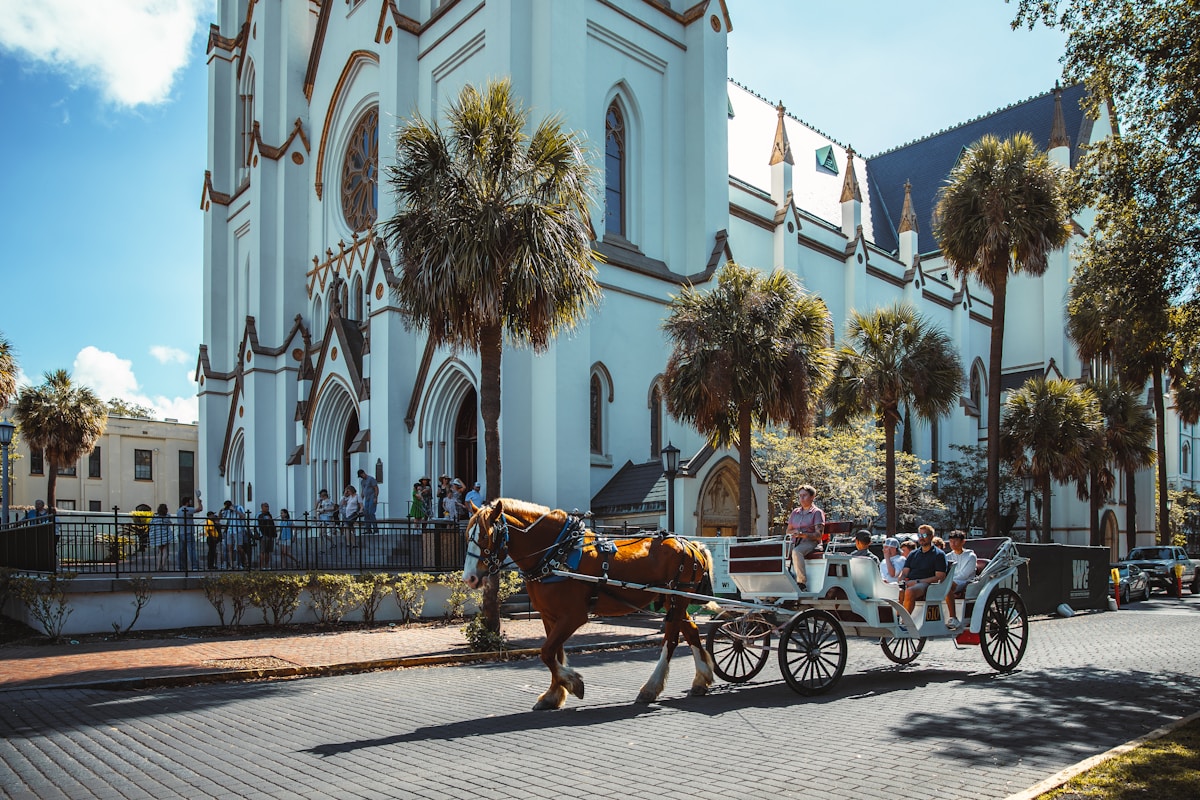
What strikes me about this history is how invisible it is. You can walk down River Street today and stand in front of those warehouses — many of them are restaurants now, shops, offices — and there is nothing that tells you that coffee was once processed here. That Savannah participated in the supply chain that connected Brazilian plantations to American breakfast tables. That the city's economy, so thoroughly defined by one commodity, also quietly benefited from managing another.
After the Civil War, coffee roasting in Savannah declined. The major roasting centers moved north — New York became the place where most American coffee was processed and distributed. Savannah's role in the coffee trade faded. By the twentieth century, there was no coffee roastery left in the city.
Until now.
I don't think of Copper Lane as reviving something lost. We're not attempting to recreate a 1880s coffee roastery or pretend to historical authenticity we don't have. We're building something new, with new equipment and new relationships with farmers we actually know and visit.
But there's something in the air here, something in the history, that makes sense to us. A city that was once a crossroads of global commerce. A city built by people moving goods through the world. A city where coffee arrived from somewhere else and was transformed before continuing on.
That's what we're doing here at Copper Lane. Taking coffee that comes to us from farms in Ethiopia, Colombia, Honduras, Guatemala. Transforming it on our 15-kilogram drum in this warehouse. Shipping it to people across the country who have asked us to. We're participating in a commerce chain that has deeper roots in this place than most people know.
The next time you walk past the old warehouses on River Street, standing in the moss-filtered afternoon light, you might think about that. The coffee that passed through this city. The people who processed it. The contradictions of history — beauty and trade and war and survival all tangled together in the same supply chain.
And maybe, if you're thirsty, you'll stop by Whitaker Street and try the coffee we're roasting today. It's a small thing. But small things are what accumulate into history.